
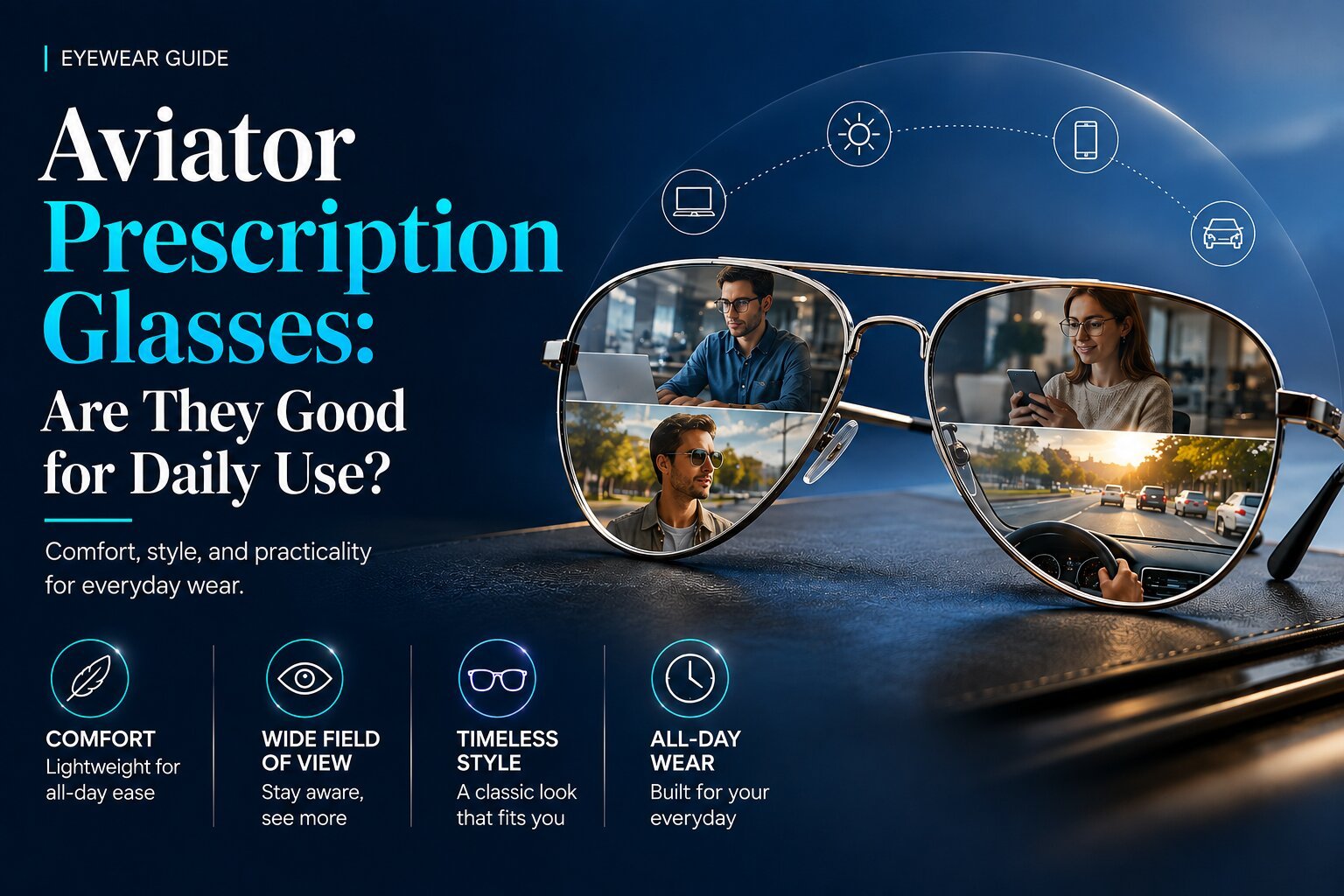
Aviator glasses have remained popular for decades. Originally designed for pilots, their distinctive teardrop-shaped lenses and thin frames have evolved into a versatile fashion choice for men and women.
Today, aviator frames are available not only as sunglasses but also as prescription glasses. Their large lenses, lightweight construction, and recognizable shape make them attractive to people who want eyewear that feels practical without looking ordinary.
But are aviator prescription glasses suitable for everyday use?
For many people, the answer is yes. However, their suitability depends on the frame material, lens size, prescription strength, face shape, and overall fit.
What Are Aviator Prescription Glasses?
Aviator prescription glasses use the traditional aviator frame shape but contain clear corrective lenses rather than standard sunglass lenses.
Classic aviator frames usually feature:
- Large teardrop-shaped lenses
- A thin metal frame
- A double or reinforced bridge
- Adjustable nose pads
- Slim temples
- A lightweight design
Modern versions may also include geometric lenses, flatter shapes, thicker rims, acetate details, or mixed metal and plastic construction.
Aviator frames can accommodate several types of prescription lenses, including:
- Single-vision lenses
- Reading lenses
- Bifocal lenses
- Progressive lenses
- Blue-light filtering lenses
- Photochromic lenses
- Anti-reflective lenses
- Prescription sunglasses
This flexibility makes them suitable for work, reading, driving, outdoor activities, and general daily wear.
Are Aviator Glasses Comfortable for Everyday Wear?
Aviator prescription glasses can be very comfortable when the frame is properly fitted.
Most traditional aviator frames are made from lightweight metal, which reduces pressure on the nose and ears. Adjustable nose pads also allow an optician to improve the position of the frame.
However, comfort depends heavily on frame quality and sizing. Oversized aviator glasses may slide down the nose if they are too wide or poorly adjusted. A frame that is too narrow may create pressure around the temples.
For daily comfort, check that:
- The nose pads sit evenly
- The temples do not press against your head
- The frame does not slide when you look down
- Your eyes are correctly positioned within the lenses
- The glasses remain stable while walking or working
A professional fitting can make a significant difference, particularly if you intend to wear the glasses throughout the day.
Benefits of Wearing Aviator Prescription Glasses Daily
1. They Offer a Wide Field of Vision
One of the biggest advantages of aviator frames is their large lens area. Larger lenses can provide a broader field of vision than smaller rectangular or narrow frames.
This may be useful for people who drive, work on multiple screens, move frequently between tasks, or simply prefer fewer frame edges within their line of sight.
The large lens shape can also work well with progressive lenses because it provides more vertical space for different viewing zones.
2. They Are Lightweight
Many aviator frames are made from stainless steel, titanium, aluminium, or other lightweight metals.
A lighter frame can feel more comfortable during long working hours, especially when compared with thick, heavy acetate glasses.
Titanium aviator frames are particularly attractive for daily use because they are usually lightweight, strong, and resistant to corrosion.
3. They Have a Timeless Appearance
Aviator glasses are distinctive without being limited to one fashion season. They can complement casual clothing, business outfits, and smart evening wear.
Clear-lens aviator glasses often create a confident, modern, and slightly vintage appearance. Depending on the finish, they can look professional, creative, minimalist, or bold.
Popular finishes include:
- Gold
- Silver
- Black
- Gunmetal
- Rose gold
- Bronze
Neutral finishes are usually easier to coordinate with everyday clothing.
4. They Work With Different Lens Features
Aviator frames can be paired with practical lens treatments for everyday life.
For example, anti-reflective coating may reduce distracting reflections and improve the appearance of the lenses. Photochromic lenses can darken outdoors and become clearer indoors, while UV-protective prescription lenses help protect the eyes from ultraviolet radiation.
People who spend long periods using digital devices may also consider lenses designed for their working distance and visual needs. Lens selection should be based on professional advice rather than frame style alone.
5. They Suit Many Face Shapes
Aviator glasses are often associated with square and angular faces because the curved lenses can soften strong facial lines.
They may also suit oval, heart-shaped, and some round faces. The key is choosing the right variation.
For example:
- Angular aviators may add structure to round faces.
- Classic curved aviators may soften square faces.
- Medium-sized frames usually balance oval faces.
- Frames with a lighter lower rim may complement heart-shaped faces.
The frame should be proportionate to the width and length of your face.
Possible Drawbacks of Aviator Prescription Glasses
Although aviators can be excellent everyday glasses, they are not ideal for everyone.
Large Lenses May Be Heavier
Large lenses require more material. With stronger prescriptions, this can increase lens thickness and weight.
People with high prescriptions may benefit from high-index lenses, which can be thinner and lighter than standard lens materials. A slightly smaller aviator frame may also produce a better result.
Your optician should assess whether the selected frame is appropriate for your prescription before the lenses are ordered.
Thin Frames May Need More Care
Metal aviator frames can be durable, but their thin construction may bend if they are dropped, sat on, or stored without a protective case.
The nose pads and small screws may also require occasional adjustment or replacement.
Aviator glasses should always be removed using both hands to reduce stress on the hinges.
Oversized Frames Can Slip
Some aviator styles are intentionally oversized. While this creates a bold appearance, an excessively wide frame may slide down the nose or touch the cheeks.
This is especially important when ordering glasses online. Always check the frame measurements and compare them with a pair that already fits you well.
They May Not Suit Every Prescription
Very strong prescriptions, complex progressive requirements, or certain prism prescriptions may require careful frame selection.
Aviator frames are not automatically unsuitable in these cases, but the frame dimensions, lens material, pupillary distance, fitting height, and optical centre must be measured accurately.
Are Aviator Frames Good for Progressive Lenses?
Aviator frames can work well with progressive lenses because they usually provide enough vertical lens depth for distance, intermediate, and near-vision zones.
However, not every oversized aviator frame is automatically suitable.
The frame must sit consistently on the face. If it slides or changes position throughout the day, the wearer may struggle to use the correct part of the progressive lens.
For better results, choose a stable frame with properly adjusted nose pads and sufficient lens height.
Are Aviator Glasses Suitable for Office Work?
Yes. Aviator prescription glasses can be suitable for office work when paired with the correct lenses.
For computer-based work, the prescription should match the distance between your eyes and your screen. Some people may need standard single-vision lenses, while others may benefit from occupational or office lenses.
An anti-reflective coating can also help reduce glare from artificial lighting and digital screens.
For a more professional office appearance, consider black, silver, gunmetal, or subtle gold aviator frames with moderately sized lenses.
Can You Wear Aviator Prescription Glasses While Driving?
Aviator frames may be convenient for driving because their large lenses provide a broad viewing area.
For daytime driving, UV-protective prescription sunglasses or photochromic lens options may be considered. However, some photochromic lenses may not darken significantly inside a vehicle because car windscreens can block much of the ultraviolet light that activates them.
For night driving, clear prescription lenses with a high-quality anti-reflective coating may help reduce lens reflections. Tinted lenses should generally be avoided at night because they reduce the amount of light reaching the eyes.
Drivers should always use a current prescription that meets the applicable vision requirements in their location.
How to Choose Aviator Glasses for Daily Use
Before purchasing aviator prescription glasses, consider the following factors.
Choose the Correct Frame Size
Check the lens width, bridge width, and temple length. The frame should align with the width of your face without extending excessively beyond the temples.
Select a Suitable Material
Titanium is lightweight and durable, while stainless steel provides strength at a more accessible price. Acetate aviators may feel more substantial and create a bolder appearance.
Consider Your Prescription
Strong prescriptions may work better with smaller lenses and high-index materials. Ask your optician to evaluate lens thickness before selecting an oversized frame.
Prioritize Proper Lens Coatings
Depending on your routine, useful options may include:
- Anti-reflective coating
- UV protection
- Scratch-resistant treatment
- Photochromic technology
- Prescription sun tint
- Polarized prescription lenses
Check the Nose Pads
Soft, adjustable nose pads can improve stability and comfort. They should rest evenly without leaving excessive pressure marks.
Think About Your Daily Routine
A delicate fashion frame may be suitable for office use but less practical for sports, construction work, or physically demanding environments.
Your glasses should match both your appearance and your lifestyle.
How to Care for Aviator Prescription Glasses
To keep aviator glasses in good condition:
- Store them in a hard protective case.
- Clean the lenses with a microfiber cloth.
- Use an appropriate lens-cleaning solution.
- Avoid placing the glasses lens-side down.
- Do not leave them inside a hot vehicle.
- Remove them using both hands.
- Have loose screws and nose pads professionally adjusted.
Avoid cleaning prescription lenses with clothing, tissues, or household glass cleaners, as these may scratch the surface or damage lens coatings.
Are Aviator Prescription Glasses Worth Buying?
Aviator prescription glasses are worth considering if you want lightweight eyewear, a wide viewing area, and a timeless frame style.
They can be suitable for daily wear, office work, reading, driving, and general activities. However, the best results depend on selecting a frame that fits your face and supports your prescription correctly.
People with strong or complex prescriptions should seek professional guidance before choosing an oversized aviator frame.
Final Verdict
Aviator prescription glasses can be an excellent choice for everyday use. They combine practical lens coverage with a recognizable design that works across professional and casual settings.
The most important factors are not simply the shape or colour of the frame. Comfort, measurements, lens material, prescription compatibility, and professional fitting determine whether the glasses will perform well throughout the day.
Choose a well-fitted aviator frame with lenses suited to your visual needs, and you can enjoy stylish, functional eyewear that remains comfortable from morning to evening.